I first heard the story of Louis Zamperini in 1998, when CBS ran a special on him during the Winter Olympics in Nagana, Japan. I was astounded by this man’s story, and I couldn’t believe he could endure so much and emerge from the crucible whole. From his hardscrabble childhood to his brief Olympic career, to the hell on earth he endured as prisoner of war during the Second World War, to the postwar turmoil which nearly destroyed his life before faith in Christ led him to a new and higher purpose, this guy seemed too good to be true. Being in theological seminary at the time, I especially was impressed with how Zamperini’s faith fueled his ability to forgive those who had treated him so badly in Japan.
Zamperini’s story resonated with me and I never entirely forgot it; from time to time something would cause it to come to mind. A couple years later I even happened upon the special mid-episode when CBS re-ran it years later, and often wondered how I could find out more him. Somehow the release of Unbroken: A World War II Story of Survival, Resilience, and Redemption, Laura Hillenbrand’s biography of Zamperini, escaped my notice when it was first released in 2010. But once I discovered the book I inhaled it, and later read it to my pre-teen son (who also loved it). It is such a riveting story that I figured it was only a matter of time before somebody made it into a movie. In 2013 I was thrilled to learn a film was in the works, and Austin and I have been looking forward to it ever since. Our long wait came to end yesterday, when we joined a packed opening-day Christmas matinee to finally see Zamperini’s story play out on the big screen.
A Riveting Story
Unbroken tells the parts of the story it tells well. The opening act cuts between Zamperini’s action as a B-24 bombardier during World War Two and his childhood, during which his natural speed and his brother’s persistence transformed him from a juvenile delinquent to an Olympic runner. The movie moves quickly through these scenes, however, using them to springboard into hellish ordeal unleashed when Zamperini’s B-24 crashed at sea. For 47 desperate days, threatened constantly by sharks and madness, he and two surviving crew members clung to two rafts, insufficient rations, and dwindling hope as they drifted westward across the vast, empty Pacific into Japanese-controlled waters.
Zamperini’s eventual capture by the Japanese meant the exchange of one hell for another. He was initially held at Kwajalein, where his captors interrogated him and led him to believe that he would be executed at any moment. He was then sent to Japan and interred at Omori, a prisoner of war camp outside Tokyo. At this latest hell he met his own personal demon, Matsuhiro Watanabe, a sadistic camp commandant nicknamed “The Bird” by the prisoners because, according to one of them, calling him what they really wanted to call him would get them killed. The Bird, for whom cruelty was as natural a habit as breathing, greeted all new prisoners with the news that “you are prisoners of Japan, and will be treated accordingly.” But Zamperini earned an extra measure of The Bird’s attention, and over the next two years suffered sustained physical and psychological torture at his hands. The last half of the movie focuses on Zamperini’s grim efforts to survive the next beating and outlast his personal tormentor at Omori and, later, at Naoetsu prison camp.
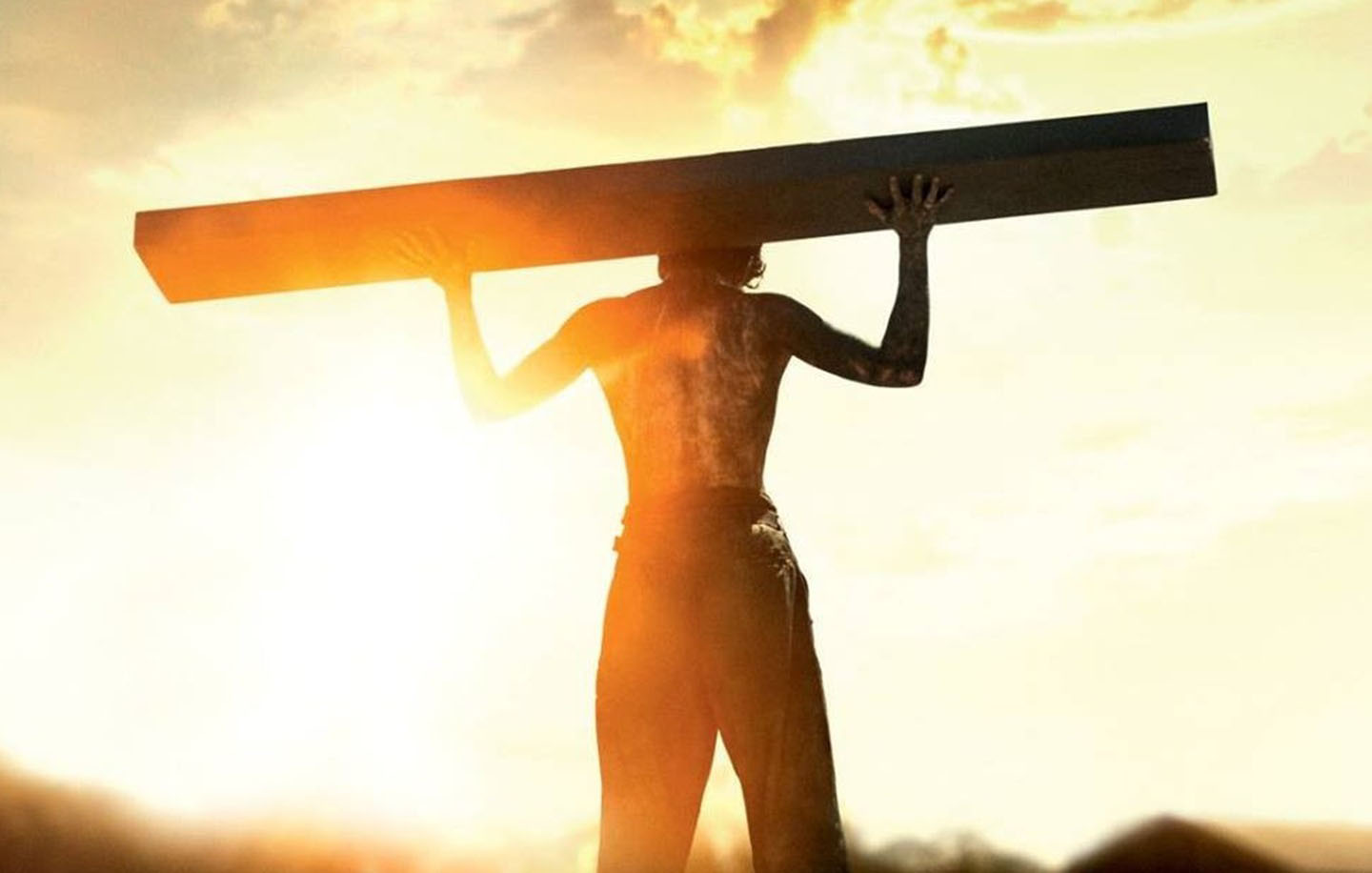 In all this Unbroken is an inspiring tale of hope in the face of despair and injustice, and what it attempts to do it does well. However, while it deals respectfully with the faith that became the defining characteristic of Zamperini’s postwar life, it does not explore that faith in any depth. This is mainly because the movie ends with his return home to his family after the war, and in doing so only tells half of his story. So basically it becomes The Shawshank Redemption, which is a fine movie about the power of hope and the will to overcome. But Unbroken could have been about something much more powerful.
The Heart of the Matter
A fair amount of ink has been spilled about this; Luke Zamperini suggests that his father would not have wanted his faith in Christ to be presented in a pushy, cliché fashion and is satisfied with the way Unbroken handles the “redemption” part of “Survival, Resilience, and Redemption” in a series of short text cards just before the credits roll. On the other hand, Alissa Wilkinson argues in her review for ChristianityToday.com that the failure to deal with this essential aspect of Zamperini’s story with the same seriousness as his struggle to survive at sea and in the camps reduces Unbroken to merely a tale of triumphing over a hated enemy, thereby robbing it of its most remarkable element: Zamperini’s forgiveness of his captors, including the Bird, as a consequence of his surrender to Christ’s will. Wilkinson’s fear is that moviegoers, Christians included, will be tempted to take the wrong message away from the film.
Am I weird for being sympathetic to both these points of view? The reason I appreciated Luke Zamperini’s endorsement of Unbroken is because I really don’t want to hear a bunch of Evangelicals going off about the omission of Louis’s conversation to Christ at a Billy Graham Crusade and his subsequent work with Graham’s ministry. Nothing against America’s Pastor, who has left his mark (mostly good) on the Church in America today; I just don’t think his style and methods translate well to skeptical audiences today. But I think Wilkinson’s concerns are entirely justified. The movie, as presented, celebrates the defeat of your enemies. Zamperini’s life, in his imitation of Christ, came to stand for the forgiveness of your enemies. Maybe that doesn’t translate well to skeptical audiences today either, but it never has. The problem is not because a methodology has become passé, but rather because the message is and always has been otherworldly.
Unbroken does a very good job of presenting the depths of horror Zamperini endured at the hands of powerful men who believed themselves both justified and obligated to inflect those horrors upon him. Said a different way, the movie makes abundantly clear how unforgiveable the cruelty of Zamperini’s captors was, particularly in the case of Watanabe. After watching that, you can understand why your grandparents or great-grandparents considered the purchase of a Toyota or Datsun to be an act of treason. But unless you understand the complete unforgiveability of the crime, you can’t begin to comprehend the profoundly divine power at work when the man who has suffered such barbarism forgives the men who visited it upon him.
Good as it is, without that powerful act of forgiveness Unbroken is only half a story. It would be nice if the filmmakers had found a way to explain more completely that Zamperini returned home a shattered man, visited in his dreams almost nightly by a demon named Matsuhiro Watanabe and buried most days in alcoholism; that he resolved to return to Japan, find The Bird, and take his revenge by murdering him; that his spiral into rage and despair had nearly destroyed his young family when new wife dragged him reluctantly to Graham’s tent revival in Los Angeles; that faith in Jesus Christ enabled him to let go of his pain and anger and bitterness; that he returned to Japan, embraced the guards from the Omori and Naoetsu prison camps and told them that he forgave them; that, upon learning that Watanabe was not dead as had been assumed, Zamperini wrote The Bird to say, “Under your discipline, my rights, not only as a prisoner of war but also as a human being, were stripped from me. The post-war nightmares caused my life to crumble, but thanks to a confrontation with God through the evangelist Billy Graham, I committed my life to Christ. Love has replaced the hate I had for you. Christ said, ‘Forgive your enemies and pray for them.’”
Hopelessly Broken
What makes the unforgiveable unforgiveable is the limited human capacity to forgive, to say “I hold no grudge against you, and expect no restitution from you, and sincerely want the best for you despite what you have done to harm me.” Most of us struggle to forgive even petty slights, but what Zamperini experienced far outstripped our poor ability to forgive. My own faults and limitations run afoul of any impulse I might have to forgive. I can justify why forgiveness in unwarranted by pointing to the balance sheet and asserting my rights as the aggrieved, but that’s just my pride talking, the same pride that gets in the way of me acknowledging my own shortcomings and the wrongs I have done to others. In bitterness I might wish harm on those who harm me, but the fact that doing so would require me to overlook or excuse quite a bit of my own selfishness doesn’t always stop me. The vulnerability that forgiveness requires, combined with confusion between forgiveness and trust (which is a critical distinction to keep in mind in certain instances), can lead us to throw up our hands and give up on the idea. We can forgive, especially at the level demonstrated by Louis Zamperini, only with the help of the Author of the idea.
And here is where my disagreement with Wilkinson’s critique of Unbroken comes in: I really don’t know how you communicate all that in a movie like this without making another movie altogether. This is why I’m willing to give Unbroken a bit of a pass on its underwhelming presentation of the power of forgiveness; there’s so much story to fit into limited time. And I don’t know how you present something as raw and complex and soul-bending and life-redefining as that kind of forgiveness cinematically and really do it justice. I think forgiveness is not something you can adequately explain (I feel like I’m failing miserably here); forgiveness is best understood by the experience of it. And this is where I think Christians who admire Louis Zamperini and might be tempted to complain about the movie’s omissions will have some work to do.
What Zamperini came to understand is that we are hopelessly broken when we remain trapped in a world of anger and hurt and bitterness, and that healing only comes when, with God’s help (because we are too proud and too weak and too lost to do it any other way) we love those who call us enemies and forgive those who wrong us. We preach it and we teach it, but we often do an imperfect job of living it. But I know we can do better, or else we would not be taught to “bear with each other and forgive one another if any of you has a grievance against someone; forgive as the Lord forgave you.” Perhaps the best way to complete Unbroken is to profoundly forgive, as God alone can enable us, every day.
 The Friday Blahg